
Skip to content

Free written quotesLocal crews

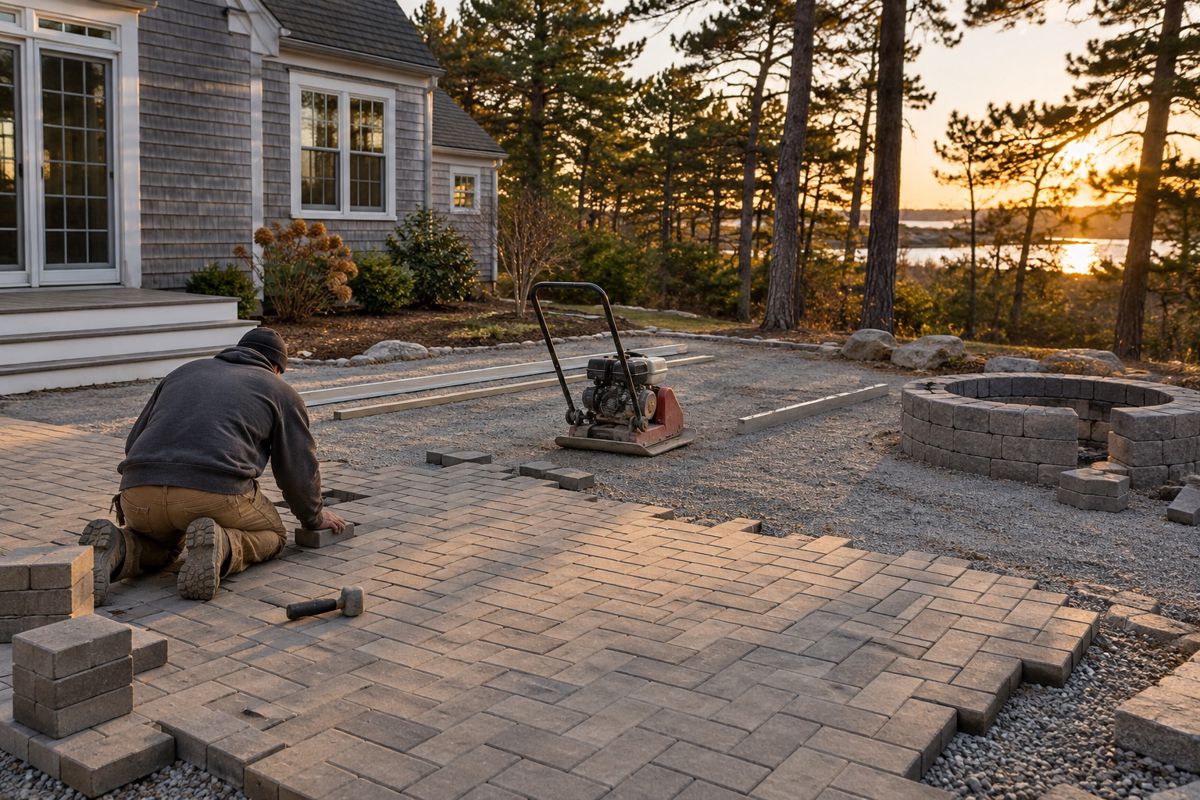
Paver patio under construction with a stone base and a fire pit ring

Hardscaping in Barnstable, MA

Hardscape contractor in Barnstable for patios, walks and fire pits

Paver patios and walkways built on a proper base, so they stay level through Cape Cod winters.

  • Compacted stone base and firm edging
  • Patios, walkways, steps and fire pits
  • Written quote before work starts

Step 1 of 3

What do you need?

What does a hardscape contractor in Barnstable do?

Hardscaping is the solid, non-living part of a yard: patios, walkways, steps, seat walls and fire pits. A hardscape contractor in Barnstable plans the layout, digs out the area, builds a compacted base, sets the pavers or stone, and finishes the joints and edges so the surface stays tight. Good hardscaping is mostly what you cannot see. The base under the surface decides whether a patio stays flat or ripples after a few winters.

Paver patios are popular here because they handle freeze and thaw better than a rigid slab in many cases, and a single paver can be lifted and reset if something settles. Walkways, entry steps and fire pit areas are built the same way, with the same attention to base and drainage.

Why do pavers fail on Cape Cod, and how do we prevent it?

Sandy soil drains well, which helps. But sand also shifts, and frost can lift a thin base in winter. Most paver problems come from the same few shortcuts.

  • A shallow or loose base. Proper work digs deep enough for a layer of crushed stone, packed in lifts with a plate compactor.
  • No edge restraint. Without a firm border, pavers creep outward and the joints open.
  • Poor slope. A patio needs a slight fall away from the house so water does not sit against the foundation.
  • Weak joint material. Joint sand washes out in heavy rain unless it is the right type and is installed correctly.

Salt air is also hard on some metals and soft stone, so we talk through materials with you. If you plan to use de-icing salt on a walkway, tell us, because it can damage certain pavers.

What changes the price of a paver patio or walkway?

Pavers are sold and installed by the square foot, but the final cost depends on much more than size. Here is what we look at when we write a quote.

  • Material. Concrete pavers, porcelain and natural stone are priced very differently.
  • Pattern and shape. Curves, borders and mixed patterns take more cutting and time.
  • Base depth and excavation. Soft spots or an old patio to remove add work.
  • Grade changes. Steps, seat walls or a retaining wall add to the job.
  • Access. Hauling material by hand through a narrow gate takes longer than using machines.
  • Extras. Fire pits and built-in seating raise the total.

You see each part listed in the written quote.

A small walkway or landing can be finished in a couple of days. A typical patio often takes about a week once the crew starts, with excavation and base work taking the most time. Larger projects with steps, walls, a fire pit and curved edges can take two weeks or more. Rain slows the work because wet base material is hard to compact, and we will tell you if the schedule has to move.

Spring through fall is the main season. Work can continue into early winter when the ground allows, but frozen soil stops digging and compaction. Many Cape Cod owners book in late winter for a spring start, especially for second homes that need to be ready for summer visitors. If you have a date in mind, call early and we will tell you what is realistic.

What should you know before building a patio or fire pit?

Before work starts we check a few things on the lot. We ask where the septic tank and leaching field sit, since heavy equipment and new paving can cause damage there. We look at the distance to wetlands, ponds or the coast, because work close to them may need review by the town conservation commission. We also ask about fire pits, because local and fire department rules cover open burning and how far a fire feature should sit from the house and trees. A gas or propane unit may follow different rules than a wood fire.

On the day itself, expect noise from compactors and saws, a delivery of stone and pavers, and a crew that keeps the yard orderly. Want to see how a patio fits the rest of the yard? Read about landscape design, or return to the home page.

Free written quotes Local crews Reliable scheduling Tidy job sites

Questions about landscaping in Barnstable

Do pavers or poured concrete work better on Cape Cod?

Both can work, but pavers have an edge where the ground freezes and thaws. Individual pavers can move slightly without cracking, and a settled area can be lifted and reset. A poured slab can crack if the base shifts. A slab can still be the right choice for some uses, so we talk through your needs and the site before you decide.

How deep should a paver base be?

It depends on how the surface will be used and on the soil underneath. A walkway or patio in a frost area often calls for six inches or more of compacted crushed stone, and surfaces that carry cars need more. Sandy soil drains well, but it still needs a firm, level base. We set the depth for each job and put it in the quote.

Do I need a permit for a patio or fire pit?

It depends on the town, the size of the project and where it sits on the lot. Ground level patios often need no building permit, but work near wetlands or the coast may need conservation review. Fire pits can fall under fire department rules. Check with the town before you build, and tell us early so we can plan around any limits.

Can you build near my septic system?

We can build near one, but we keep heavy loads and deep digging off the tank, pipes and leaching area. Cars, machinery and new paving over a system can cause damage that is costly to fix. Tell us where the system sits, or check your septic records or the town health office. We then lay out the patio clear of it.

Will weeds grow between my pavers?

Some can, over time, because wind carries seed into any joint. A solid base, tight joints and the right joint sand slow it down a lot. Sweeping the surface now and then and refreshing the joint sand every few years keeps it neat. We explain care steps during the final walkthrough.

How it works

1

Tell us about the yard

Size, goals and any photos.

2

Site visit and quote

We walk the property and put the price in writing.

3

We do the work

Scheduled crew, cleanup included.

Request hardscaping

Tell us what you need and we call you back.

Step 1 of 3

What do you need?

No obligation.

Ready when you are

Call now or request a quote online.

(508) 555-0174
Get my free landscaping quote