
Skip to content

Free written quotesLocal crews

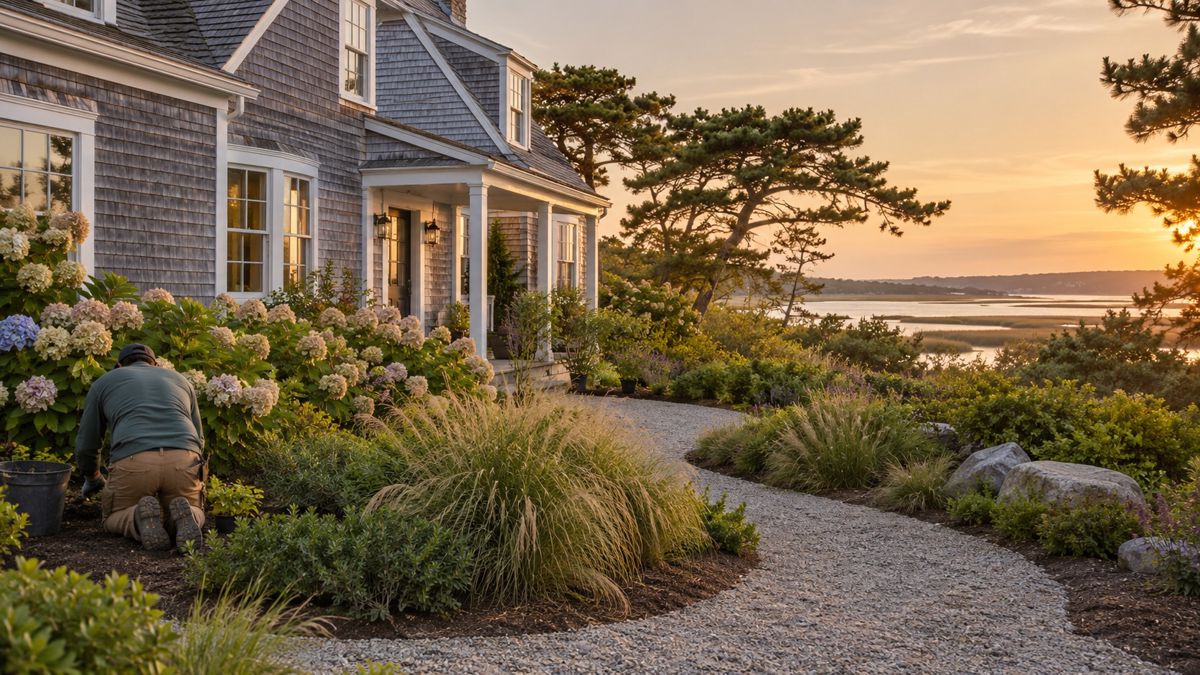
Shingled Cape Cod house with native grasses, hydrangeas and a curving stone path

Pine woods, ponds and larger lots

Landscaping in Marstons Mills, MA for wooded lots

Lawn repair, drainage, pavers, walls and sprinklers for Marstons Mills properties. Request a written quote and we will confirm availability for your lot.

  • Plans built around Cape Cod sand, wind and salt
  • Written quote before work begins
  • Serving Barnstable and nearby villages

Wooded lots and open sand in Marstons Mills

Marstons Mills sits inland from the coast, with ponds, cranberry bogs, pine and oak woods and lots that are often larger than those in the busy villages. Many homes were cut out of the forest, so the yard is a patch of cleared sand surrounded by woodland.

Typical requests include creating a usable lawn from rough ground, softening the edge between lawn and woods, building a patio for a quiet evening, and fixing places where rain cuts channels through bare soil. The setting is calm, and the landscaping looks right when it feels connected to it.

Acidic soil, deer and the edge of the woods

Soil under pines and oaks is acidic and low in nutrients, so lawns and beds need compost and, where tests suggest it, lime. Deer browse many popular shrubs, and ticks are a fact of life near the woods, which is why open lawn edges and gravel borders are popular.

Route 149 and the surrounding roads give access to most of the village, though side roads can be sandy and tight. Fallen needles and leaves collect in drainage swales and can block them. We choose plants that deer tend to avoid, keep mulch beds neat and plan drainage so storm water moves across the lot without carving ruts.

Landscaping services we bring to Marstons Mills

All five of our services have a place on a wooded inland lot.

  • Landscape design can reshape a rough yard into zones for play, dining and planting, with a clear border against the woods.
  • Hardscaping offers paver patios and fire pits that give a family a spot to gather away from the grass.
  • Sod installation replaces patchy lawn in cleared areas after the soil is amended.
  • Retaining walls and drainage handle rolling ground and storm water running off driveways.
  • Irrigation keeps new turf alive on fast-draining sand, using zones that match sun and shade.

Many owners choose two of these together and schedule the rest later.

Not every property is on town water, and septic systems are common. That matters for landscaping in a few ways.

  1. Know where the tank and leach field sit before digging, and keep heavy equipment and walls off them.
  2. If you use a private well for irrigation, check the capacity before sizing a system.
  3. Avoid deep-rooted trees and shrubs near septic components.
  4. Use drip lines or smaller zones if water supply is limited.

We ask about these items during the site visit, and they can affect both the plan and the quote.

Pond buffers, conservation and approvals

Marstons Mills has several ponds and a river, and land near them is regulated. Buffers around wetlands, ponds and streams may limit clearing, new lawn and fertilizer use. The conservation office can tell you if a filing is required.

Lawn fertilizer rules also exist in Massachusetts and may be stricter near water. Check current guidance before choosing a lawn program. We can suggest low-input approaches, such as compost, slow-release products and native plantings, that suit buffer areas. If your lot is near a pond, tell us at the start so we can plan within the rules.

How a quote works for Marstons Mills properties

We serve Marstons Mills and are not located there, so the request confirms availability. Use the form or call (508) 555-0174.

Describe the land, its size and what you want to change. Photos of the cleared area, the woods and any washouts are useful. We follow up with questions about utilities, wells and septic locations, then visit the property. After measuring and checking the soil, we write a quote with the scope, materials and timing. If the project is large, we can break it into phases. You approve the parts you want, and we schedule around the weather and season.

Get a quote in Marstons Mills

Tell us what you need and we call you back.

Step 1 of 3

What do you need?

No obligation.

Questions about Marstons Mills

How do I get a healthy lawn from pine-woods sand?

Start with soil. Test the pH, add compost and lime if needed, and level the surface before laying sod or seed. Sandy soil needs regular watering until roots take hold. Without improvement, lawns often thin out. We explain what the soil needs and what to expect for upkeep. Rake the surface smooth before it is laid so the finished lawn feels even underfoot.

What plants do deer usually leave alone?

No plant is deer-proof, but many aromatic and prickly choices are browsed less, such as certain ornamental grasses, boxwood, lavender and some native shrubs. Young plants are more vulnerable than established ones. We can suggest options and discuss temporary fencing or sprays to protect new plantings. A fence or a spray program is cheaper than replacing plants every spring.

Can I build near the pond on my property?

Possibly, but buffer rules can apply. Work close to ponds, streams and wetlands may need conservation review. The town can tell you what applies to your lot. Share the answer with us before we quote, so the plan is written with those limits in mind. Ask for the setback distances in writing, so everyone works from the same line.

Will fallen pine needles clog my drainage?

They can. Needles and leaves collect in swales, grates and pipes and slow the flow. Regular clearing helps, and design choices such as wide swales, gravel edges and covered inlets reduce problems. We build drainage with maintenance in mind and explain the checks to make each year. A quick look each autumn after the leaves fall keeps small blockages from growing.

Is mulch or stone better around the house?

Each has uses. Mulch feeds the soil and suits planting beds, while stone is better near foundations where you want a dry edge and less fuel for pests. Gravel borders also help with fire safety and tick control. We suggest a mix that suits the layout and upkeep you prefer.